A party for people the system forgot.
New Republic is for progressive libertarians — people who want a government as small as freedom allows and as strong as safety requires. We register as both Republicans and Democrats, run in both primaries, fight for ranked-choice voting, and ask one thing bigger than a vote: become a leader.
The strategy: win the primaries
Elections are decided in primaries — low-turnout contests where a committed few pick the names everyone else later rubber-stamps. That is our arena. We register as both Republicans and Democrats and run in both primaries wherever the law allows — and where it doesn't, we fight to change the law to ranked-choice voting. A handful of organized leaders can move an outcome far out of proportion to their numbers. Multiply that across hundreds of races, in both parties, and you change who governs.
The principle: power answers to people
Every plank of our platform comes back to one idea: power should answer to people — never to money, and never to size. So we take the profit motive out of politics, keep markets honestly competitive, protect the sectors where profit turns perverse, and shrink government to the smallest footprint that still keeps us safe and free.
Why "New Republic"? Why Roosevelt?
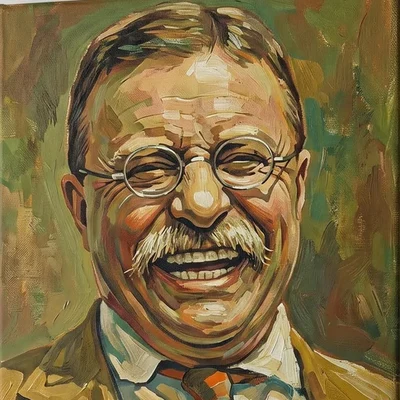
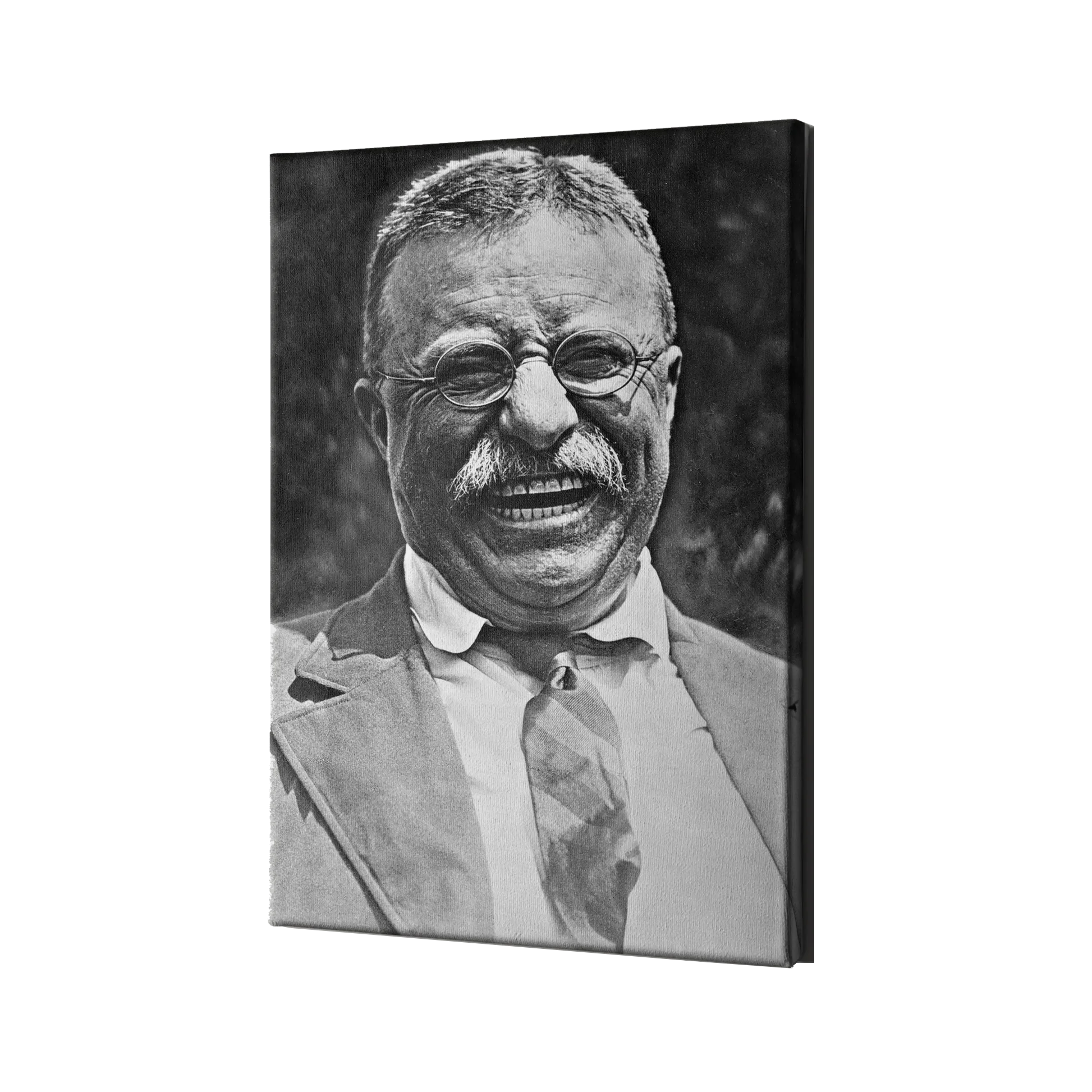
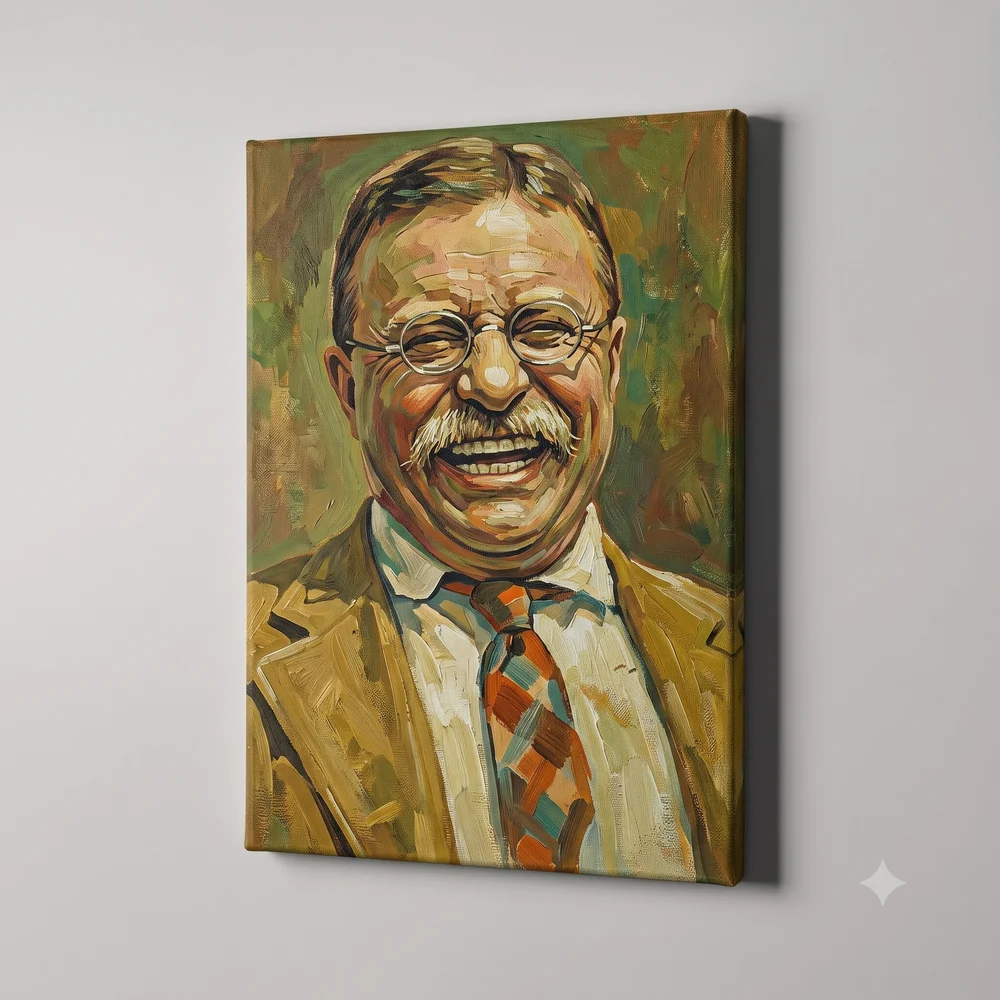
Theodore Roosevelt broke the trusts, championed the "Square Deal," and split from his own party to fight for reform. His "Bully!" — an old word for splendid — becomes our motto: "(A) Bully, for you!" We are a bully, for you — against monopoly, against corruption, against being left behind. A painted version of his iconic photograph is our mascot.
The boy who built himself into a movement
Early Life
Theodore Roosevelt began as an unlikely champion — a sickly, asthmatic boy born in 1858 to a wealthy New York family, who willed himself strong through boxing, riding, and the strenuous life he would preach forever after. He won a seat in the New York State Assembly at twenty-three, ranched in the Dakota Badlands, cleaned up the corrupt New York City police as commissioner, and served as Assistant Secretary of the Navy.
The Rough Riders
When the Spanish–American War broke out in 1898, he resigned to raise and lead the 1st United States Volunteer Cavalry — the legendary “Rough Riders,” a ragtag regiment of cowboys, ranchers, lawmen, and Ivy League athletes — and led the charge up Kettle Hill at San Juan Heights. He came home a national hero, became Governor of New York, then Vice President.
“I'm as strong as a bull moose and you can use me to the limit.” — letter to Mark Hanna, June 27, 1900. The nickname stuck.
An Assassin's Bullet
An assassin’s bullet made him President in 1901, at forty-two the youngest the nation had ever had. He governed by what he called the Square Deal: he busted the great trusts, brought the railroads to heel, won the Pure Food and Drug Act and meat-inspection laws, took the side of labor, and set aside some 230 million acres of public land for the people who would come after.
“Speak softly and carry a big stick; you will go far.” — the West African proverb he made his motto: letter to Henry L. Sprague, 1900; famous after the Minnesota State Fair, 1901
The Bull Moose
On October 14, 1912, on his way to a campaign address in Milwaukee, he was shot in the chest at close range — the bullet slowed by his steel eyeglasses case and the folded fifty-page speech in his breast pocket. He delivered the speech anyway, talking for nearly an hour with the bullet still in him.
“I don't know whether you fully understand that I have just been shot — but it takes more than that to kill a Bull Moose.” — opening his speech, bullet still in his chest. Milwaukee, October 14, 1912
A New Nationalism
By 1912 he was convinced his own party had abandoned reform. “We stand at Armageddon,” he thundered to his supporters in Chicago on June 17, 1912, the eve of the Republican convention, “and we battle for the Lord!” Denied the nomination, he and his followers walked out and founded the Progressive (“Bull Moose”) Party on his platform of the New Nationalism. His “Confession of Faith” and the Progressive platform read like a manifesto for the people — direct primaries, the initiative and referendum, votes for women, an honest economy, and a square deal for the working man.
That progressive-Republican revolt is the lineage the New Republic claims. Hear it in his own voice:
Washington tried to warn us
In September 1796, declining a third term, George Washington — the only president who never belonged to a party — published his farewell letter to the nation. He owed nothing to anyone; what follows is what he chose to spend that credibility on: the “baneful effects of the spirit of party.” Quoted exactly, from the full text preserved by Yale's Avalon Project.
The warning, in the most solemn manner
“Let me now take a more comprehensive view, and warn you in the most solemn manner against the baneful effects of the spirit of party generally. This spirit, unfortunately, is inseparable from our nature, having its root in the strongest passions of the human mind. It exists under different shapes in all governments, more or less stifled, controlled, or repressed; but, in those of the popular form, it is seen in its greatest rankness, and is truly their worst enemy.”
Not a footnote — “in the most solemn manner.” And not one party or the other: the spirit of party itself, which he calls popular government's worst enemy.
What party machines become
“However combinations or associations of the above description may now and then answer popular ends, they are likely, in the course of time and things, to become potent engines, by which cunning, ambitious, and unprincipled men will be enabled to subvert the power of the people and to usurp for themselves the reins of government, destroying afterwards the very engines which have lifted them to unjust dominion.”
The machine serves the people right up until someone cunning enough captures the machine. This is why our party is servient to the citizen — never the reverse.
Where it ends
“The alternate domination of one faction over another, sharpened by the spirit of revenge, natural to party dissension, which in different ages and countries has perpetrated the most horrid enormities, is itself a frightful despotism. But this leads at length to a more formal and permanent despotism. The disorders and miseries which result gradually incline the minds of men to seek security and repose in the absolute power of an individual; and sooner or later the chief of some prevailing faction, more able or more fortunate than his competitors, turns this disposition to the purposes of his own elevation, on the ruins of public liberty.”
Read that chain again: revenge-sharpened faction → exhausted public → strongman. He wrote it before political science had a name for any of it.
The everyday damage
“Without looking forward to an extremity of this kind (which nevertheless ought not to be entirely out of sight), the common and continual mischiefs of the spirit of party are sufficient to make it the interest and duty of a wise people to discourage and restrain it. It serves always to distract the public councils and enfeeble the public administration. It agitates the community with ill-founded jealousies and false alarms, kindles the animosity of one part against another, foments occasionally riot and insurrection. It opens the door to foreign influence and corruption, which finds a facilitated access to the government itself through the channels of party passions. Thus the policy and the will of one country are subjected to the policy and will of another.”
False alarms. Manufactured animosity. Riot. Foreign influence riding in “through the channels of party passions.” Every clause has a modern address.
The fire in the hearth
“There is an opinion that parties in free countries are useful checks upon the administration of the government and serve to keep alive the spirit of liberty. This within certain limits is probably true… But in those of the popular character, in governments purely elective, it is a spirit not to be encouraged. From their natural tendency, it is certain there will always be enough of that spirit for every salutary purpose. And there being constant danger of excess, the effort ought to be by force of public opinion, to mitigate and assuage it. A fire not to be quenched, it demands a uniform vigilance to prevent its bursting into a flame, lest, instead of warming, it should consume.”
He didn't pretend the fire could be put out — only that a free people must never let it rule the house. That vigilance is a plank of this platform: Not a Third Party — one movement, both primaries, no pledge of obedience to any machine.
Source: George Washington, Farewell Address (1796) — full text at the Avalon Project, Yale Law School. Emphasis and section headings are ours; the words are his.
Frequently asked
Are you Republicans or Democrats?
Both, on purpose. We register as both Republicans and Democrats and run in both primaries wherever the law allows — and where it doesn’t, we fight to change the law to ranked-choice voting. The goal is to put a progressive-libertarian choice on as many ballots as possible. Good government is not a partisan product.
What does "progressive libertarian" mean?
Progressive where it protects people — clean elections, real competition, a level playing field, and a safety floor no one falls through. Libertarian where it frees them — a government shrunk to the smallest size that still keeps us safe, with markets and non-profits doing the rest.
How do you run in both parties’ primaries?
An individual usually has to pick one registration to vote or run in a party’s primary — so collectively our leaders register across both, fielding progressive-libertarian candidates in Republican and Democratic primaries wherever the rules allow. The long game is to change primary laws to ranked-choice voting, so party registration stops being a gate that locks voters and candidates out. The strategy is reach, not allegiance.
What is the "five-firm rule"?
Our test for a genuinely competitive market: at least five firms, none holding more than 20% market share. Below that, a market is a presumed monopoly that must show evidence it isn’t using size to bully smaller competitors. Read more on the platform.
How is the party funded?
As a non-profit. We believe all political action should be organized as non-profit — transparent, mission-first, with no private profit in who governs. We also support repealing Citizens United.
How do I get involved?
Become a leader. Run for something, organize your area, volunteer, or fund the work. The ask is bigger than a vote — and that’s the point.